
This guide contains Amazon affiliate links. As an Amazon Associate we earn from qualifying purchases, at no extra cost to you.
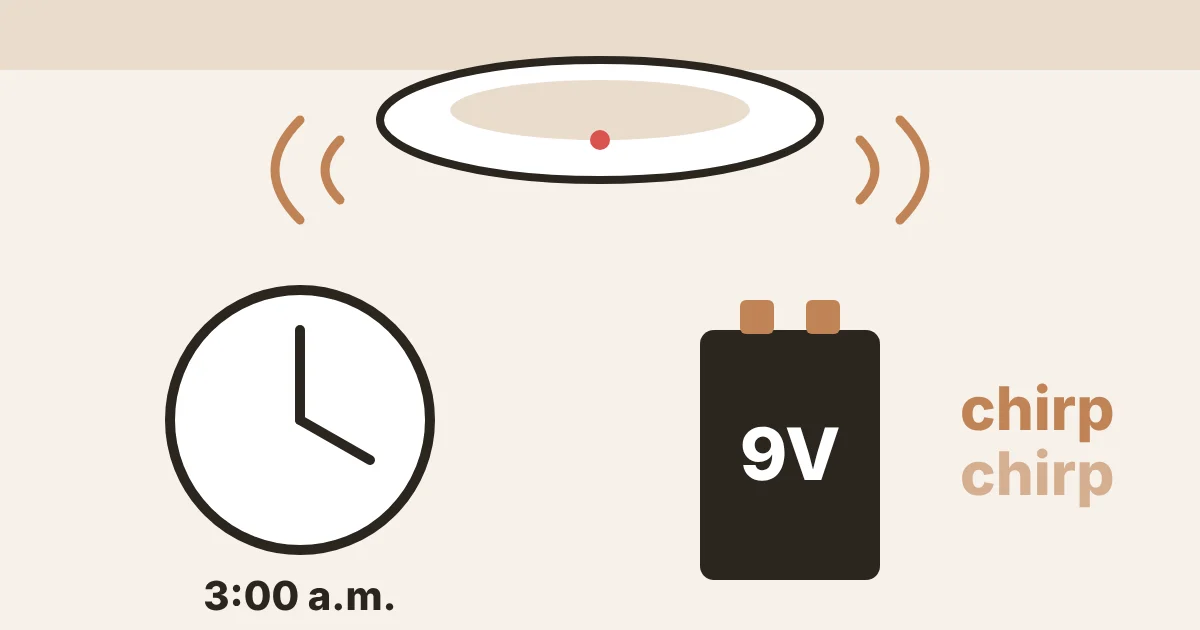
Tenants call about two things in the first cold weeks of the season: the heat, and a smoke alarm that chirps at 3 a.m. Over the years of managing my rentals, the second call has taught me a routine that ends the chirping in about ten minutes, and it’s also a good moment to check whether the alarms are due for replacement. The clocks went back an hour on November 1, which fire departments have long used as a reminder to test alarms, so this is the week to do it.
Chirp decoder
What is your alarm telling you?
How to find which alarm is chirping
A chirp is short and high-pitched, which makes it bounce around hallways. Stand under each alarm for a full minute. In an interconnected system, where one alarm sets off the others, only the alarm with the problem chirps for a low battery, but in a real alarm the one that started it usually flashes its light differently from the rest; the manual says how. Don’t forget alarms in the basement, garage and storage rooms, and CO alarms plugged into outlets near the floor.
The 10-minute fix
- Check the exact battery type on the label: 9V, AA or a sealed lithium battery. Many alarms specify brands that have been tested in them; lithium 9V batteries last much longer than alkaline in alarms that allow them.
- For hardwired alarms, switch off the circuit breaker before you twist the alarm off its base and unplug the connector.
- Replace the battery and close the drawer fully. On many models the alarm won’t mount on its base if the drawer is open; a half-closed drawer is a classic cause of chirps that “won’t stop.”
- Reset it: with the battery out, hold the test button for 15–20 seconds to drain leftover charge. Then put the battery in and press test until it sounds.
- Clean it. Dust and small insects in the chamber cause false alarms and chirps. Vacuum the vents gently with a brush attachment.
- Read the date on the back. If it’s more than 10 years old, replace the whole alarm, whatever it’s doing.
Changing several alarms? Do them all at once: if one battery is weak, the others are likely close. 9V lithium batteries cost more up front and save a lot of ladder trips.
When to replace the alarm instead
The NFPA says to replace smoke alarms 10 years from the manufacture date; carbon monoxide alarms typically last 5 to 10 years depending on the model. Many newer alarms announce their end of life with a different chirp pattern or a voice message, and sealed 10-year alarms are designed to be replaced, not opened. When you replace, buy the same type for interconnected or hardwired systems so the connector and the interconnect still match.
10-year sealed-battery smoke alarm
No battery changes for the life of the alarm: when it expires, you replace the whole unit. First Alert and Kidde both make popular models; some include a photoelectric sensor, which is less prone to cooking nuisance alarms.
Pros: no 3 a.m. battery chirps for a decade; easy to install with no wiring.
Cons: can’t be interconnected unless you buy a wireless-interconnect model; the whole unit goes in the trash at end of life.
Combination smoke and CO alarm
One device that covers smoke and carbon monoxide, useful in hallways outside bedrooms. If your heat runs on gas, propane or oil, you need CO protection on every level.
Pros: fewer devices on the ceiling; one test button.
Cons: when one sensor expires, the whole unit needs replacing; placement rules for smoke and CO differ slightly.
Hardwired replacement alarm (same brand)
Replacing a hardwired alarm with the same brand usually lets you plug into the existing connector; switching brands may need a new plug-in adapter or wiring.
Pros: keeps your interconnect working; backup battery included.
Cons: turn off the breaker first; mixing brands can break the interconnect.
Our full comparison is in the best smoke and CO detectors. While you’re on the ladder, run through our daylight saving time smart home checklist, and if your heat won’t start, our sister site has 9 checks for a furnace that won’t turn on.
FAQ
Why does my smoke detector chirp every 30 seconds?
Almost always a low battery. A single short chirp every 30 to 60 seconds is the standard low-battery warning. Replace the battery with the exact type printed on the alarm, then press and hold the test button to reset it.
Why does my smoke detector keep chirping after I changed the battery?
The most common reasons: the alarm still holds a little charge and needs resetting (hold the test button for 15 to 20 seconds with the battery out), the battery drawer isn’t fully closed or the battery isn’t seated on the contacts, the wrong battery type was used, another alarm in the house is the one chirping, or the alarm has reached its end of life.
Why do smoke detectors chirp at night?
Batteries lose voltage as they get colder. Homes cool down at night, often more after the heating season starts or the thermostat is set back, so a weak battery dips below the alarm’s threshold in the early morning hours and the chirping starts.
How often should smoke alarms be replaced?
The National Fire Protection Association says to replace smoke alarms 10 years after the date of manufacture printed on the back. Carbon monoxide alarms usually last 5 to 10 years, depending on the model; check the label.
How do I stop a hardwired smoke detector from chirping?
Hardwired alarms have a backup battery, and that battery is usually the cause. Turn off the circuit breaker, twist the alarm off its base, replace the backup battery, reconnect it, turn the power back on and press the test button. If it still chirps, check its age: hardwired alarms expire too.
Sources
- NFPA: Smoke alarms (install, test, replace every 10 years)
- U.S. Fire Administration: Smoke alarms
- First Alert: Why is my smoke alarm chirping?
- Kidde: Smoke alarm chirping and beeping guide
- U.S. CPSC: Carbon monoxide information center
Affiliate disclosure: Smart Home Shields is a participant in the Amazon Services LLC Associates Program. As an Amazon Associate we earn from qualifying purchases. If you buy through our links, we may earn a small commission at no extra cost to you. Product details on Amazon change often, so check the current listing before you buy.